
Category: Uncategorized
-
Dolly is not patentable without its mitochondria DNA—the unpatentability of Myriad’s gene and beyond
The Supreme Court issued a decision in Association of Molecular Pathology v. Myriad Geneticsholding that naturally occurring DNA sequences are not patentable. To recap, at the center of the controversy in the Myriad case was Myriad’s so-called gene patents–Myriad’s BRCA1 and BRCA2 genes. The Court ruled that the isolation and identification of naturally occurring DNA sequences was unpatentable…
-
Patenting Strategies for Small Businesses and Individual Inventors—Patentability Search Techniques on USPTO website
Before you spend money and time to apply for a patent, you should always do a patentability search to make sure that your technology has not been patented or published by others before. For a patentability search, U.S. Patent and Trademark Office (USPTO) website is a good place to start. Here is the patent search website…
-
What’s patent eligible and what’s not: patent eligible subject matter comparison – China
As a national strategy, China is trying to move from being a world manufacturing factory to being an innovation leader. Since the introduction of the “Law of the People’s Republic of China on Progress of Science and Technology” in 2008, China has made staggering progress toward promoting the scientific and technological innovations, which is evidenced by…
-
Summary of the America Invents Act

Repost from AIPLA: http://www.aipla.org/advocacy/congress/aia/Pages/summary.aspx Filing Reforms Under this section, the U.S. transitions from a First to Invent patent system to a system the First Inventor to File system. A derivation proceeding is established to replace the interference proceeding currently employed by the USPTO. The purpose is to determine whether a claimed invention in an earlier filed…
-
Maximizing exclusivity for pharmaceutical products
1. The Hatch-Waxman Act The Drug Price Competition and Patent Term Restoration Act, commonly known as the “Hatch-Waxman” Act, was enacted in USA in 1984. The Act aims to strike a balance between the drug innovators and generic manufacturers by permitting limited extensions of patent term to compensate for market time lost during the drug approval…
-
On-sale bar to patentability could be triggered by an order to your own OME manufacturer
On-sale bar is a patentability bar derived from 35 U.S.C. 102 of the U.S. Patent Law. Under 35 U.S.C. 102(a), a person shall be entitled to a patent unless- (1) the claimed invention was patented, described in a printed publication, or in public use, on sale, or otherwise available to the public before the effective filing…
-
Patent Eligibility of Gene: isolated gene not patent eligible in US
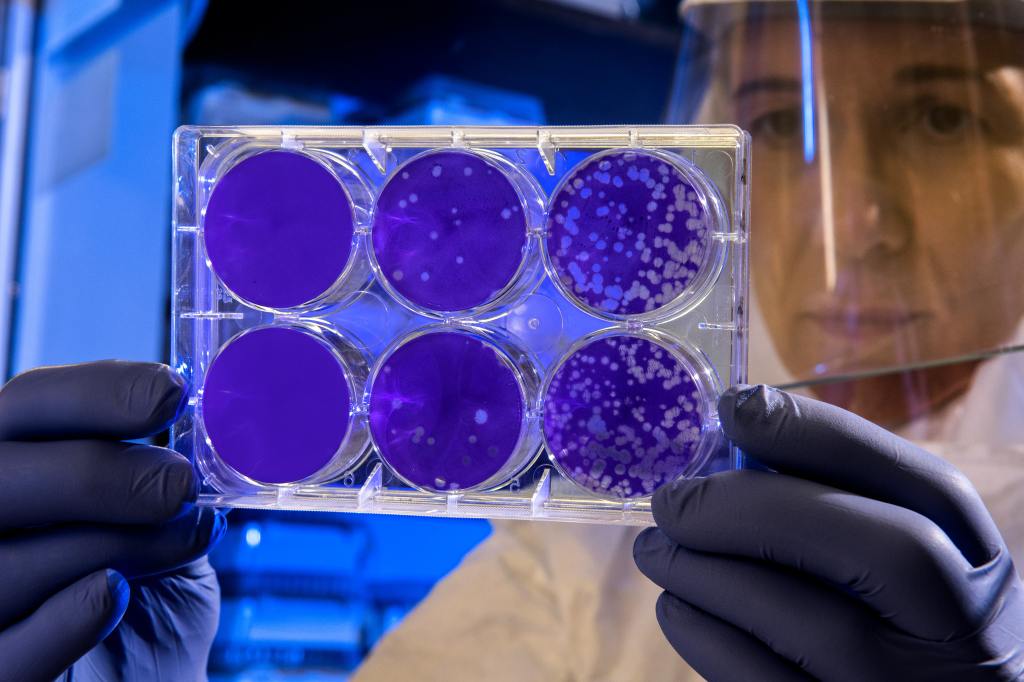
Well, it’s final—isolated gene is no longer patent eligible in US. The multi-years long, contentious and emotional fight on the gene patentability climaxed with a straightforward decision from U.S. Supreme Court in Association for Molecular Pathology v. Myriad, 569 U.S.____ on June 13, 2013. The case began with Myriad’s identification and sequencing of the two breast cancer-causing…
-
Climbing up to the World Stage: the Third Amendment to the Chinese Patent Law

In a showing of its desire to transform from a world’s factory into an innovation-oriented country, China recently announced the enactment of the third amendment to the Chinese Patent Law. Since adopting its original Patent Law in 1984, China has enacted two amendments, the first in 1992 and the second in 2000. The first amendment…
-
Summary and Implication of Phillips v. AWH Corp.

Introduction On July 12, 2005 , the Federal Circuit issued its en banc decision in Phillips v. AWH Corp., addressing fundamental questions regarding patent claim construction. See Phillips v. AWH Corp., No. 03-1269, -1286 (Fed. Cir. Jul. 12, 2005 ). The decision clarifies a handful of issues central to the claim construction process, in particular, the emphasis that is to be…

