
Category: Uncategorized
-
Understanding Bayh-Dole Act: the ownership of an invention funded by government grants
If you’ve ever licensed a technology out of a university, you would know “Bayh-Dole Act.” The Bayh–Dole Act, 35 U.S.C. §§200-212, titled “Patent Rights in Inventions Made Under Federal Funding Agreements, codified the rules in dealing with intellectual property rights on inventions funded by federal government grants. The act is implemented by 37 C.F.R. 401 titled “Standard…
-
Watch out for the “hereby assigned” language in your employment contract
Companies often ask what language to use in their employment contracts to make sure that the titles of the inventions by their employees are transferred to the company. My answer has always been “hereby assigned,” at least for now. The rule that the “hereby assign” language in an employment contract immediately transfers the title of an…
-
What’s patent eligible and what’s not: patent eligible subject matter comparison – European Patent Convention
In Europe, patents will be grated for all inventions, in all fields of technology, as long as the invention is new, involve an invention step and is susceptible of industrial application (Article 52(1) EPC). However, this broad claim of patent eligible subject matter is subject to various exceptions and exclusions. Article 53 EPC provides several general…
-
Independent Written Description Requirement: US patent system’s build-in buffer for new technologies

Patent law is a contract between government and inventor. A patent is a grant of legal monopoly, and its resulting commercial benefit, by government under which the inventor/patentee can exclude others from making and using his invention. The quid pro quo of this monopoly is the inventor/patentee’s disclosure of the invention to the public in the patent…
-
What’s patent eligible and what’s not: patent eligible subject matter comparison – US
When an inventor comes up with an invention/idea, the first task is to decide if the invention/idea is a patent eligible subject matter. Passing the “patent eligible subject matter” bar is the first requirement in the path to a patent. If you are an entrepreneur inventor, before you invest money and time to further develop and commercially…
-
Domain Dispute in China and Korea: how to get your domain back

Startup companies often live on a shoe string budget in the first few months, if you are lucky, and, more likely, in the first few years. Because of the budget constrain, these companies tend to ignore IP strategy in foreign countries, especially in Asian countries. Language hurdles and culture barrier often compound the problem. When the startup company…
-
Use in Commerce Requirement for a Trademark Registration

Trademark right is a common law right that is obtained by use of a mark in commerce. The U.S. Patent and Trademark Office (“USPTO”) generally requires evidence of such use before a mark can be federally registered. This blog post aims to help you to understand what constitutes a “use in commerce” of a mark for obtaining…
-
Make a clean break on patent ownership in a divorce
Here is a story and let me know if it sounds familiar: once upon a time, a man invented a fabulous gadget and obtained a patent on the gadget. He subsequently started a company making and selling the gadget. Starting a company was hard—the man worked night and day and traveled extensively to sell his gadgets while…
-
Dolly is not patentable without its mitochondria DNA—the unpatentability of Myriad’s gene and beyond
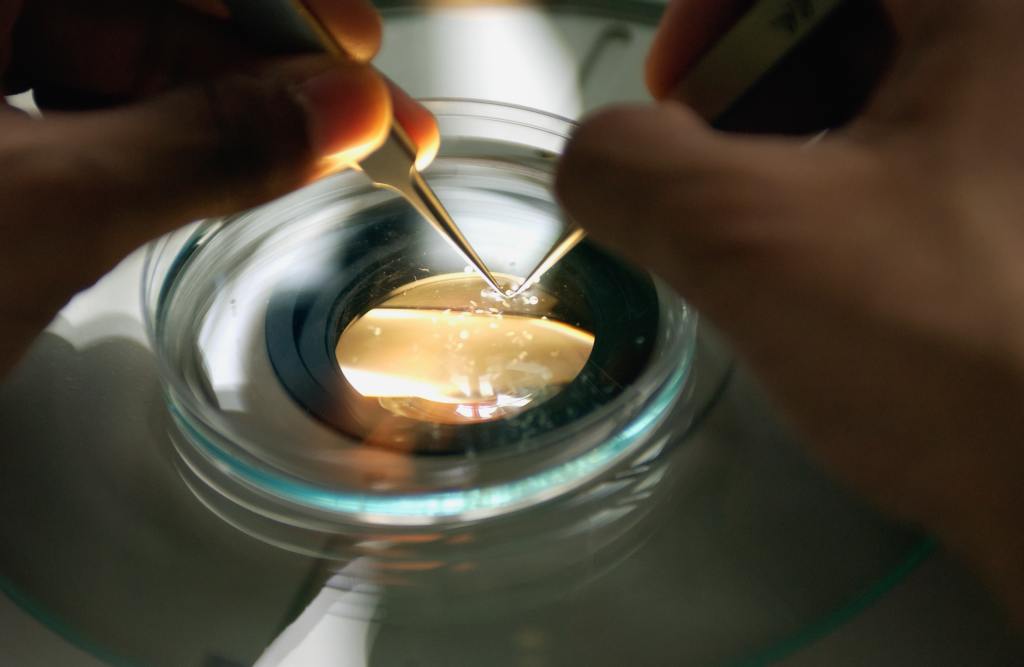
The Supreme Court issued a decision in Association of Molecular Pathology v. Myriad Geneticsholding that naturally occurring DNA sequences are not patentable. To recap, at the center of the controversy in the Myriad case was Myriad’s so-called gene patents–Myriad’s BRCA1 and BRCA2 genes. The Court ruled that the isolation and identification of naturally occurring DNA sequences was unpatentable…
-
Patenting Strategies for Small Businesses and Individual Inventors—Patentability Search Techniques on USPTO website
Before you spend money and time to apply for a patent, you should always do a patentability search to make sure that your technology has not been patented or published by others before. For a patentability search, U.S. Patent and Trademark Office (USPTO) website is a good place to start. Here is the patent search website…
 EPIMED RESEARCH